

South Korea MFDS approves Pharmactive Biotech’s saffron extract stress relief health claim


Key takeaways
- Pharmactive’s Affron is now the only saffron extract authorized by South Korea’s MFDS to carry a scientifically backed stress relief claim.
- The approval followed a rigorous two-year screening process that validated the extract’s safety, bioavailability, and consistent chemical profile.
- Clinical data involving over 1,000 participants demonstrated that a low dose of the extract effectively regulates stress hormones and improves mood.
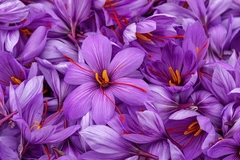
South Korea’s Ministry of Food and Drug Safety (MFDS) has officially granted Pharmactive Biotech Products individual license approval for its flagship saffron extract, Affron. The endorsement greenlights the ingredient’s scientifically backed stress relief claim, making it the sole holder of this recognition in the country.
The complex and lengthy process was facilitated in collaboration with Hyundai Bioland, a key player in K-beauty and functional foods based in Cheongju-si, Seoul. Affron’s safety was demonstrated through a combination of high-dose animal studies, mechanistic liver safety data, and extensive human clinical experience.
“This designation marks a major regulatory victory for Pharmactive, as the MFDS is noted to be among the world’s most rigorous authorities when it comes to bioactive product approvals,” says María Muñoz, head of Quality Assurance and Regulatory Affairs at Pharmactive.
“To earn this endorsement, companies must demonstrate that their products meet the highest standards of quality, efficacy, and safety through a uniquely demanding and lengthy screening process.”
Broader APAC commerciality
South Korea’s MFDS conducts stringent vetting before granting health claim licenses. The agency establishes parameter tables for specific claims in each health category, specifying which parameters products must meet to obtain approval.
These typically include specific biomarkers, mechanisms of action, clinical evidence, along with clear safety validation. The MFDS also specifies the types of studies — in vitro or in vivo — that are accepted to fulfill these benchmarks.
Supplements containing Affron that are marketed in South Korea are now certified to carry a Health Functional Food seal, which Pharmactive notes is recognized among South Korean consumers and across the wider Asia-Pacific (APAC) region.
The approval process stretched to more than two years. Pharmactive submitted a comprehensive dossier detailing its branded botanical’s chemical fingerprint and toxicological data, as well as a full history of preclinical and clinical trials.
Preclinical and clinical dossiers
Several preclinical studies focused specifically on stress-response biology informed Pharmactive of important mechanisms of action. At least four human trials have specifically confirmed Affron’s benefits for occasional stress and mood.
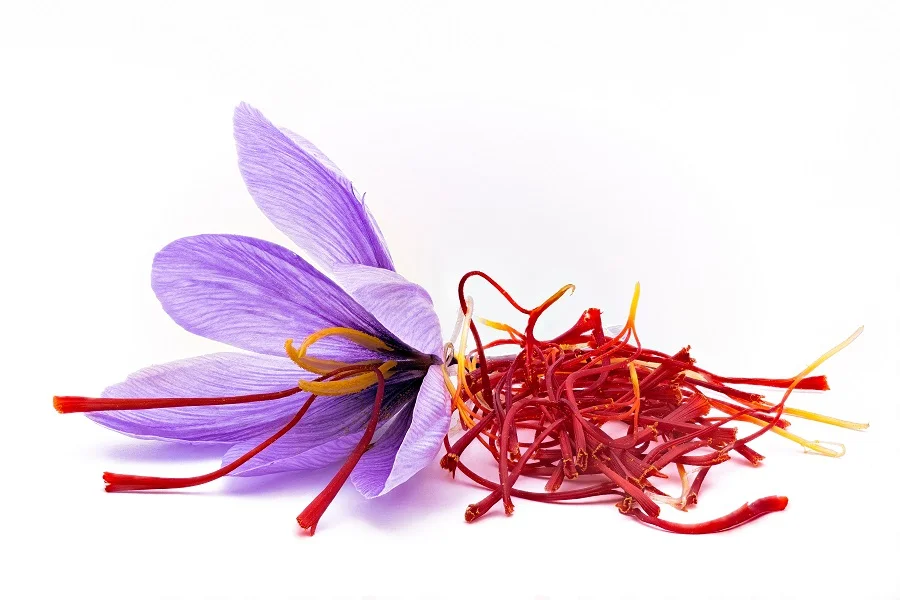 Findings have indicated Affron reduces stress hormone signaling.One preclinical in vivo study conducted in South Korea provided mechanistic insights. In a chronic stress model in rodents, Affron enhanced stress resilience by helping regulate the hypothalamic-pituitary-adrenal axis, which is the body’s central stress-response system.
Findings indicated reduced stress hormone signaling, reflected in lower corticosterone and adrenocorticotropic hormone levels.
“Affron’s safety and efficacy are supported by a solid evidence base, comprising 12 clinical trials on over 1,000 participants,” says Marina Diez, head of R&D and quality control at Pharmactive. “Moreover, Affron was tested on diverse populations, including healthy adults, adolescents, and perimenopausal women.”
One clinical trial demonstrated the ingredient’s support for individuals with mild depressive symptoms. Seventy-two percent of participants in the study’s Affron group reported a significant reduction in depressive symptoms, compared to 54% who took a placebo.
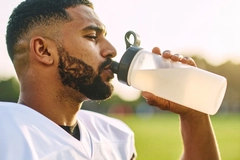
Another study found that Affron may enhance people’s enjoyment of sports activities and decrease post-workout stress and anxiety in adult males.
Low dose efficacy
Pharmactive touts its extract as having the lowest needed dose of pure saffron on the South Korean market. The company produces this ingredient using a proprietary, solvent-free green extraction technology. This is done to safeguard the potent compounds of the fragile botanical, ensuring it maintains a reproducible “chemical fingerprint.”
Pharmacokinetic studies demonstrated the bioavailability of key metabolites in Affron, such as crocetin. One extensive analytical study of 88 industrial batches found that the ingredient’s original quality and metabolite profile were maintained for up to 36 months of storage.
Analytical tools, such as High-Performance Liquid Chromatography, found that the ingredient maintains consistent levels of key compounds, including crocin isomers, which have antioxidant and anti-inflammatory properties and are responsible for the plant’s mood-boosting, calming, and neuroprotective effects.
Moreover, the extract exhibited consistent levels of picrocrocin, a bitter glycoside precursor responsible for saffron’s flavor that transforms into the calming, aromatic compound safranal.
Affron also contains standardized concentrations of lepticrosalides, which are the compounds responsible for saffron’s bioactive benefits.
South Korea stress relief market
Stress is currently ranked as a key health category in Korea, for which many consumers are seeking a natural solution, according to Pharmactive.
Lim Tian Cai, APAC region business development manager at Pharmactive, reiterates South Korea as a strategically important market for the company. “This is not only because it is a premier cross-border nutraceutical manufacturing hub in Asia but also home to a regulatory authority that is considered gold standard.”
“MFDS-granted health claims are highly respected by the locals. Moreover, ‘Korea-made’ is highly valued across Asia and beyond,” he adds. “Finished products emanating from the country are making significant inroads into Asian markets, given Korea’s reputation as an advanced and high-trust market for health functional foods.”