




Sleep quality, duration and regularity impact teens’ diet and heart health


Key takeaways
- Later sleep and wake times in teenagers are linked to higher calorie consumption, frequent snacking, and decreased physical activity.
- Typical school schedules often conflict with the natural biological shift toward later sleep cycles in adolescents, worsening dietary and sedentary habits.
- Maintaining a consistent sleep routine and adequate duration is a critical, often overlooked factor in protecting long-term cardiovascular and metabolic health.

A new study on teenagers found that the times they go to sleep and wake up could play a significant role in what they eat and how they move throughout the day. The findings suggest quality sleep could ultimately be an important lever for protecting heart health, beyond just diet and exercise.
Teens who went to sleep and woke up later were more likely to consume more calories, snack more often, and be less physically active, especially when in school, which requires an early wake-up call, compared to on break.
The study authors warn that adolescents don’t get the eight-to-ten hours of sleep recommended by the National Sleep Foundation. Teens’ internal clocks naturally shift later into the evening during adolescence, which explains their tendency to stay up later and sleep in.

However, the researchers note that typical school schedules are at odds with teens’ natural drive for sleep. With early school schedules, they need to wake earlier than what their body clock naturally prefers.
“[Lack of] sleep is a potential risk factor for cardiometabolic health, even in teens,” stresses Julio Fernandez-Mendoza, professor of psychiatry and behavioral health at Penn State College of Medicine, US, and senior author of the study.
“Sleep timing — when going to bed and waking up — had the biggest influence on sedentary and eating behavior in teens. It’s something parents need to pay attention to — and protect — during critical developmental years like adolescence.”
Sleep patterns affect snacking habits
The researchers highlight that the body’s internal clock regulates the sleep-wake cycle over 24 hours each day. However, it also governs other key bodily processes and behaviors, like metabolism and physical activity.
For instance, they note that going to bed and waking up late doesn’t just impact a person’s sleep schedule. It can also influence their sense of hunger, craving for specific types of food, and their motivation to move or rest.
Published in Sleep Health, the study examined how different aspects of sleep — beyond simply hours slept — are associated with diet intake and composition, exercise, and sedentary behavior in 373 adolescents.
The participants were a mix of males and females between the ages of 12 and 23, split into two groups. One set was evaluated while they were in school, and the other was evaluated while they were on break.
The researchers monitored multiple aspects of sleep, including total sleep time, sleep midpoint and its irregularity, sleep efficiency, and time in bed.
 The researchers say that when teens have to align with an external schedule and fight their natural biological rhythms, it causes a “cascading effect” on eating and sedentary behaviors.They collected data using a combination of objective and subjective methods, including wrist-worn wearables, self-report surveys, and in-lab sleep studies. They also tracked food intake, snack intake, and physical activity.
Key findings
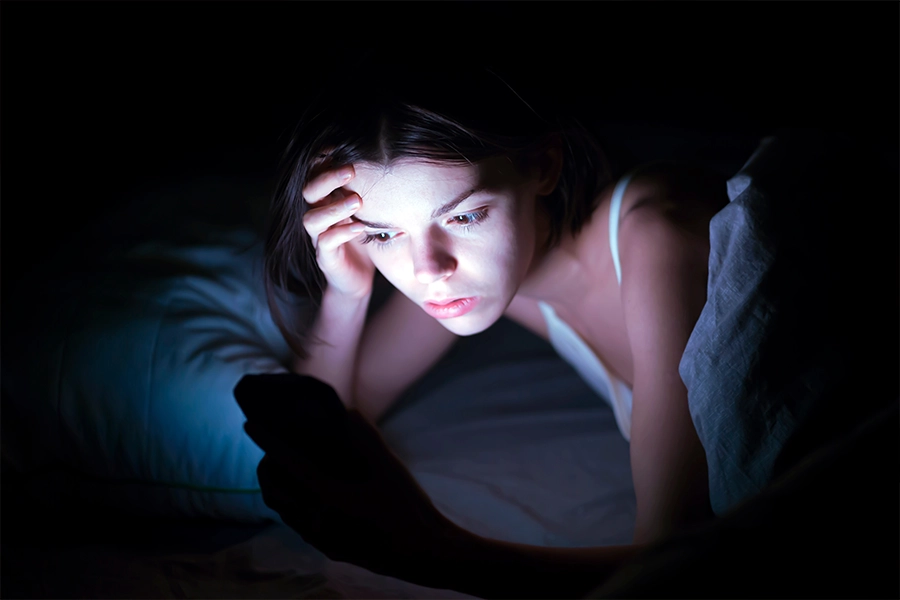
The team found that teenagers who were “night owls,” generally went to bed after midnight and woke up after 8:00 AM. They consistently ate more calories, particularly carbohydrates, and were overall more sedentary.
They also tended to snack more, especially later in the day and at night. Because they woke up later, they often skipped breakfast. Instead, they ate lunch, dinner, and a late-evening snack, which tended to be less healthy than a typical breakfast.
Highly variable sleep duration — when teens alternate between nights of shorter and longer sleep — was also associated with less healthy behavior, especially less physical activity.
According to the paper, the influence of sleep timing and variability on diet and physical activity was even two times stronger when school was in session.
The researchers say that when teens have to align with an external schedule and fight their natural biological rhythms, it causes a “cascading effect” on eating and sedentary behaviors. During school breaks, these relationships appear to weaken when teens have more flexibility with their schedule.
“When the timing of teens’ eating and snacking is out of sync with their normal biological clock, it further dysregulates their sleep,” says Fernandez-Mendoza.
“We have the tendency to separate sleep, diet, and physical activity as three distinct things, but we can’t isolate them from one another. We have to think about them together.”
Need for holistic research
Previous studies found that when adolescents don’t get enough sleep, they tend to be less physically active and to eat poorly, both of which can raise the risk of cardiovascular and metabolic disease.
However, the paper authors note these studies evaluated sleep based on a single metric, like sleep duration, and self-reported measures.
“Sleep is more than just how long a person sleeps, but there aren’t many studies that look at this issue from a holistic perspective beyond how much sleep teens get,” says Pura Ballester-Navarro, professor at Universidad Católica San Antonio de Murcia in Spain and first author of the study.
When trying to encourage healthy eating and physical activity, targeting the regularity and timing of adolescents’ sleep could be a key strategy, the researchers summarize.
The researchers advise parents and caregivers to focus on setting earlier bedtimes, longer sleep duration, and consistent sleep schedules during the school year, while reducing late-night snacking and sedentary behavior when kids are out of school.
“A consistent sleep routine is a powerful tool,” concludes Ballester-Navarro.