




High meat consumption linked to decreased dementia risk, study reveals


Key takeaways
- A long-term study from Karolinska Institutet found that higher meat intake was linked to reduced dementia risk and slower cognitive decline.
- Participants with low meat consumption and APOE34/44 genotypes had more than double the risk of developing dementia.
- Experts caution that the findings are observational and based on self-reported data, meaning causality is unclear, and further clinical trials are needed.

A study has linked high unprocessed meat consumption to a decreased risk of dementia among people with apolipoprotein E (APOE) 3/4 and 4/4 genotypes — a genetic increased risk of Alzheimer’s disease.
When consuming high amounts of meat, the population did not experience cognitive decline or dementia risk. Conversely, those with a low consumption had more than twice the risk of developing dementia.
The research team at Karolinska Institutet, Stockholm, Sweden, says the findings may contribute to the development of tailored dietary advice.
Karolinska Institutet explains that APOE is a gene that affects the risk of Alzheimer’s disease. In Sweden, approximately 30% of the population is a carrier of the gene combinations APOE 3/4 or APOE 4/4. Among those who develop Alzheimer’s disease, having these genotypes accounts for nearly 70%.
“This study tested the hypothesis that people with APOE 3/4 and 4/4 would have a reduced risk of cognitive decline and dementia with higher meat intake, based on the fact that APOE4 is the evolutionarily oldest variant of the APOE gene and may have arisen during a period when our evolutionary ancestors ate a more animal-based diet,” says first author Jakob Norgren, researcher at the Department of Neurobiology, Care Sciences and Society, Karolinska Institutet.
Slower cognitive decline
The study has been published in JAMA Network Open and followed 2,157 participants aged 60 and above for up to 15 years. None of the participants was diagnosed with dementia when the study began.
The data was based on self-reporting by the participants. When consuming a lower amount of meat, the group with the APOE 3/4 and 4/4 genes had over twice the risk of dementia compared to the group that did not carry the genes.
“Those who ate more meat overall had significantly slower cognitive decline and a lower risk of dementia, but only if they had the APOE 3/4 or 4/4 gene variants,” says Norgren.
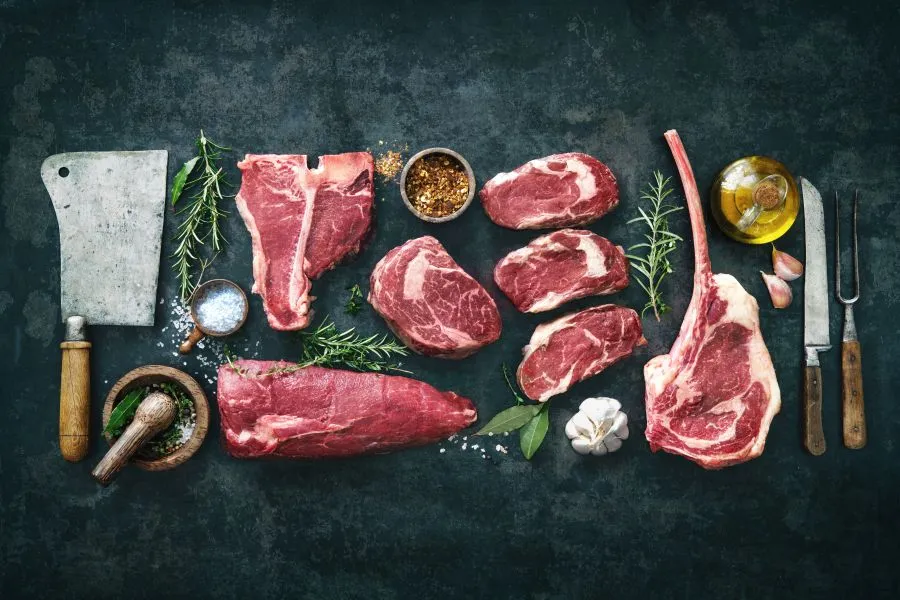 When consuming a lower amount of meat, the group with the APOE 3/4 and 4/4 genes had over twice the risk of dementia.“There is a lack of dietary research into brain health, and our findings suggest that conventional dietary advice may be unfavorable to a genetically defined subgroup of the population. For those who are aware that they belong to this genetic risk group, the findings offer hope; the risk may be modifiable through lifestyle changes.”
Experts, independent from the study and its results, have commented on the study.
“While the study is generally well conducted, the association between increased meat consumption and reduced dementia risk was not observed when looking at everyone in the study and was only marginally significant when examining the different APOE gene groups,” says professor Tara Spires-Jones, director of the Centre for Discovery Brain Sciences at the University of Edinburgh, UK.
“There are important limitations of this study to keep in mind. This type of investigation cannot prove that meat consumption was the cause of reduced dementia risk, as other factors, such as socioeconomic status, likely influence unprocessed meat consumption.”
She also points out that meat consumption was measured by self-reported diet questionnaires, and people in the early stages of cognitive decline or dementia likely have trouble remembering their diets accurately.
Spires-Jones is also Division Lead in the UK Dementia Research Institute and past president of the British Neuroscience Association.
Need for further research
There were also differences in the results on different meats. A lower consumption of processed meats was associated with a lower dementia risk regardless of APOE genotype.
Beyond brain health, the study also found a lower all-cause mortality rate for the APOE genotype carriers when consuming a higher amount of unprocessed meat.
 A lower consumption of processed meats was associated with a lower dementia risk regardless of APOE genotype.The research team stresses that further research is needed to determine a causal relationship.
“Clinical trials are now needed to develop dietary recommendations tailored to APOE genotype,” says Norgren. “Since the prevalence of APOE4 is about twice as high in the Nordic countries as in the Mediterranean countries, we are particularly well suited to conduct research on tailored dietary recommendations for this risk group.”
“This is still a relatively new area of research, and the findings should be interpreted with caution,” comments Dr. Jacqui Hanley, head of research at Alzheimer’s Research UK, also independent from the study.
“The study relied on people reporting their diet, which can sometimes lead to errors. Studies like this can spot links between eating meat and dementia risk, but cannot prove whether it is the cause. More research is needed before suggesting that specific foods can determine whether someone will develop the condition.”
In recent brain health studies, a US study found that moderate coffee intake — two to three cups daily — may reduce dementia risk, slow down cognitive decline, and preserve cognitive abilities.
Similarly, a link was found between higher omega-3 intake and lower dementia risk in an analysis including more than 217,000 adults. It found that higher omega-3 fatty acids in the blood were associated with a 35–40% lower risk of developing early-onset dementia, regardless of genetic predispositions for the disease.




Upcoming webinars

Pure love deserves a pure start: Solutions that give the best start from day one
dsm-firmenich

Magnesium bisglycinate in focus: why full chelation matters
Jungbunzlauer

Bifidobacteria and Healthy Ageing: New Insights into Ageing and Immunity
Morinaga