




Little Spoon launches organic baby milk to improve infant formula transparency and safety


Key takeaways
- Little Spoon has launched a new organic infant formula featuring grass-fed whole milk from New Zealand that meets both USDA and EU nutritional standards.
- The company is the first to publicly disclose its specific safety thresholds and publish independent, batch-level testing results for over 500 toxins and contaminants.
- The brand says it implements safety protocols “10 times more stringent” than international guidance and funds research to advance industry-wide microbiological standards.
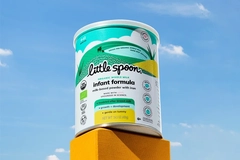 (Image credit: Little Spoon).
Little Spoon has entered the infant formula category with its new Organic Grass-Fed Whole Milk Infant Formula. The brand highlights its robust safety standards, noting that each batch of infant formula undergoes independent testing for more than 500 potential toxins and contaminants, including heavy metals, pesticide residues, and microbiological pathogens.
The company claims it is the first infant formula brand to publicly define its own safety standards, which it says are more strict than industry-wide used standards. This includes defined thresholds for microbiological and chemical contaminants. It also discloses batch-level testing results against those standards.
Little Spoon plans to publish specific numeric heavy metal results for every batch, touting an “unprecedented level of transparency” in the formula category.
“We chose to go above and beyond regulatory requirements and industry standards by publicly disclosing our testing thresholds and sharing batch-level results,” says Ben Lewis, co-founder and CEO of Little Spoon. He asserts that parents shouldn’t have to take safety claims at face value.
The new formula is made with grass-fed whole milk from New Zealand, naturally rich in beneficial fats. It also contains prebiotics to support gut and immune system development.
The recipe also features plant-based docosahexaenoic acid (DHA) for brain development.
Raising transparency bar
Infant formula safety, ingredient standards, and supply chain disruptions have fueled growing scrutiny of the industry. Last February, manufacturers faced international backlash when product recalls spanned over 65 countries due to arachidonic acid oil contaminated with the toxin cereulide.
According to Little Spoon research, only 9% of US parents say they still trust baby and kids’ food brands, while visibility into how products are tested and verified remains limited.
Organic Grass-Fed Whole Milk Infant Formula is manufactured in the US at a facility that runs more than 2,000 safety protocols and checks.
Within its safety screening program, Little Spoon voluntarily tests for sulfite-reducing clostridia, which is a group of spore-forming bacteria used as an indicator of organisms that can cause botulism.
The tests are benchmarked at a threshold 10 times more stringent than international guidance, according to the company. Testing at this level is not required by the FDA.
Outside its own product standards, Little Spoon has initiated and funded independent scientific research with the Food Research Institute at the University of Wisconsin-Madison, US, to define clearer microbiological baselines for spore-forming bacteria and advance industry standards for infant nutrition and safety.
Last year, Little Spoon was the first baby and kids food brand to publish publicly available safety standards inspired by EU benchmarks and test products for more than 500 toxins and contaminants.
For its infant formula, each finished production lot undergoes independent testing, including heavy metals and microbiological hazards such as pathogens, toxin-producing bacteria, and spore-forming organisms, including Cronobacter, Salmonella, Listeria, and Bacillus cereus.
The brand claims its portfolio of more than 100 products does not contain corn syrup, gluten, GMOs, soy, palm oil, maltodextrin, synthetic colors, synthetic pesticides, unnecessary additives, or artificial growth hormones.
From pasture to bottle
In New Zealand, grass makes up 80–90% of a cow’s diet — up to eight times more than in grain-fed systems. Little Spoon highlights that milk from grass-fed cows naturally contains beneficial fats, contributing to the nutritional profile of the finished product and reducing the need for added oils.
Moreover, cows in the country are required to graze outdoors at least 340 days per year — nearly three times longer than on farms in the US — improving animal welfare.
The company says that animal density and farming practices influence the conditions under which milk is produced and can have an impact on potential contamination risk. For this reason, Little Spoon sources New Zealand Grass Fed Organic dairy to help control risk and provide a foundation for safety.
Little Spoon’s infant formula is dual-certified USDA Organic and EU Organic. The infant formula is Clean Label Project Purity Award certified, part of the Clean Label Project First 1000 Day Promise, certified pesticide-free, gluten-free, and Kosher Dairy certified.Little Spoon, Organic Infant Formula Safety, Nutrition Science, Milk




Upcoming webinars

Pure love deserves a pure start: Solutions that give the best start from day one
dsm-firmenich

Magnesium bisglycinate in focus: why full chelation matters
Jungbunzlauer

Bifidobacteria and Healthy Ageing: New Insights into Ageing and Immunity
Morinaga