


Kirin and FANCL debut AI platform to optimize supplement tablet formulations


Key takeaways
- Kirin and FANCL developed an AI platform that evaluates thousands of formulation combinations to optimize supplement tablet size, hardness, and ease of swallowing.
- The system replaces manual trial-and-error with automated predictions, accelerating development timelines while reducing raw material loss.
- Kirin plans to leverage its R&D data to expand the scope of AI applications across future nutraceutical innovations.

Kirin Holdings Company and FANCL Corporation have jointly designed an AI-based R&D platform to streamline innovation around supplement tablets. Drawing from accumulated data on supplement formulation, the system evaluates aspects of product quality, such as tablet size, hardness, and ease of swallowing.
According to Kirin, conventional tablet design is commonly dependent on the experience and intuition of trained researchers and extensive prototyping and trial-and-error. The new automated process ultimately helps shorten product development timelines.
“During my time working in product development, even when a good formulation was found, I constantly wondered whether there might be an even better combination. When development stalled, I often faced uncertainty about whether to continue refinement or shift to a different approach,” shares Tomoki Adachi, laboratory director of Functional Foods at FANCL Corporation’s Research Institute.
“The Tablet Design AI developed in this project addresses these challenges. By enabling humans and AI to think together, we will be able to complete product development with greater confidence, knowing that we have thoroughly explored all viable options.”
Furthermore, by expanding the range of parameters that AI can predict, Adachi says the partnering companies aim for “higher-quality and more valuable” designs to meet customer expectations.
Next-generation formulas designed by AI
While supplement tablet design may appear simple, Kirin underscores it is a highly complex and nuanced field. By integrating physical data such as ingredient properties and manufacturing conditions, the new AI system is ready for practical applications in R&D.
Scientific results backing the new platform’s utility are published in Pharmaceutics. Researchers aimed to develop an AI system capable of rapidly identifying formulation conditions that satisfy multiple physical property requirements, while determining optimal formulation solutions with greater efficiency.
Kirin highlights that successful tablet design requires formulators to simultaneously meet various criteria for physical properties, such as ease of swallowing, sufficient hardness to withstand transportation, and appropriate dissolvability in the body.
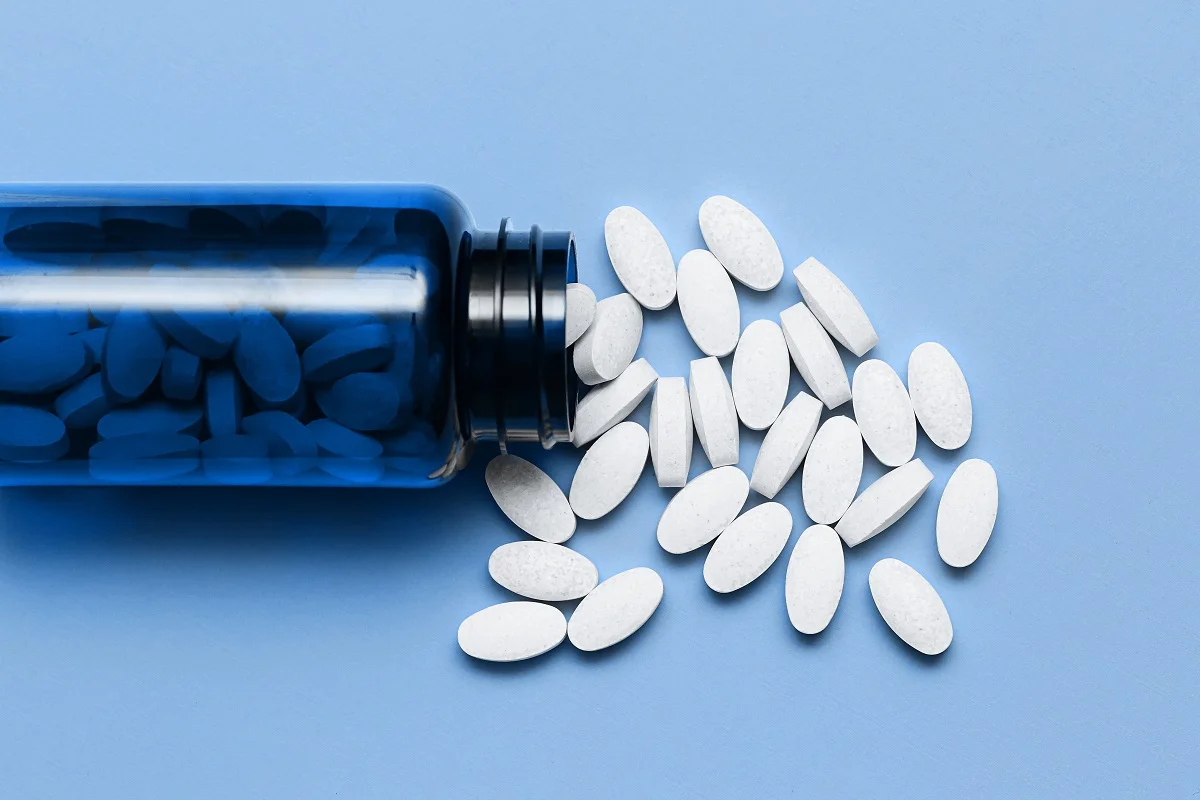 The new AI system is ready for practical R&D applications by integrating data on ingredient properties and manufacturing conditions.However, the company notes these properties can influence each other, making it necessary to conduct extensive prototyping and trial-and-error to derive optimal formulation conditions.
The study in Pharmaceutics benchmarked product performance against five key target properties: hardness, disintegration time, flow function, cohesion, and thickness.
Learning from consolidated data
The partners’ new AI system learns from past research and manufacturing data to predict multiple characteristics of supplement tablets. Kirin claims it can “accurately and rapidly” evaluate and compare thousands to tens of thousands of combinations of formulation conditions — tasks that are difficult to perform manually.
Overall, the company says that its streamlined system leads to better quality through identification of optimal formulations, product stability, and reductions in development time and raw material loss.
The rise of AI-driven research programs across the nutraceutical sector continues to drastically accelerate ingredient discovery. However, industry experts recently underscored that successful applications still require scientific validation for AI-generated insights, as well as inputs of high-quality data, human oversight, and clear communication on its use to customers.
Nutrition Insight explored these themes in further detail in a three-part series around discussions with Brightseed and Nuritas, alongside independent marketing and R&D experts, who detailed the challenges companies face when working with these technologies.
Expanding scope of future applications
Kirin says it will contribute its data assets to the program in areas such as ingredients, formulations, manufacturing, and quality evaluation. Moving forward, it aims to grow the scope of AI applications in nutraceuticals.
Last week the company launched Kirin Immuse Yoghurt Flavour, containing its proprietary ingredient Lactococcus lactis strain Plasma (LC-Plasma), in Singapore. Kirin has been globally expanding applications for LC-Plasma, noting that in recent years, demand for healthy beverages has been expanding in Singapore.
Earlier this year, Kirin and the University of Tokyo, Japan, discovered through joint research that nutrient absorption decreases in aging intestinal epithelial cells. Researchers say this finding is a global first, which may potentially lead to functional ingredient innovations to subdue intestinal aging.