



Outdated probiotics failing infants? Atlas reveals missing gut microbiome strains and opportunities


Key takeaways
- Western infants lack key strains like B. infantis found in Africa and South Asia, due to modern diets, reveals a new study.
- Commercial products use historical strains no longer present in today’s babies, with researchers questioning the effectiveness.
- The atlas enables geo-specific probiotics matched to local microbiomes for better engraftment and health.

International researchers have mapped infant gut bacteria into an atlas, revealing opportunities for creating new, tailored probiotics. The global atlas includes diverse strains of over 4,000 bacterial genomes from 48 countries, some of which are not found in commercial probiotics.
The authors point out that current probiotic strains on the market come from outdated bacterial populations and may not effectively colonize modern infants’ guts. The team identified and linked 36 strains to specific regions globally.
Additionally, the Cell paper underscores that Bifidobacterium infantis is lacking or absent in infants from Western countries but is prevalent in Africa and South Asia.
They suggest that the atlas may help design new probiotics aligned with local diets and lifestyles, which is essential for supporting infant gut health globally.

New personalized approaches to infant gut health
The researchers point out that Bifidobacteria are among the first to colonize an infant’s gut. As they grow, more microbes compete for space, influence nutrient digestion, and train the immune system, with only the most successful flourishing.
Nutrition Insight speaks with the paper’s first author from the Wellcome Sanger Institute, UK, who suggests ways industry can use the new atlas to develop personalized approaches to infant gut health.
 Shao says that the geo-specific nature of B. infantis suggests that infant probiotics should take a precision-medicine approach (Image credit: Wellcome Sanger Institute).The team found that genomes from all B. infantis probiotic products on the market have strains that are “no longer seen” in microbiomes worldwide. They call these strains “historical.”
Senior staff scientist Dr. Yan Shao tells us that the geo-specific nature of B. infantis suggests that infant probiotics should take a precision-medicine approach. The study indicates that commercial probiotics have not successfully taken hold in infant populations, leading to questions of effectiveness and their suitability as a probiotic.
“Geo-specificity would enable the industry to move beyond one-size-fits-all formulations toward region-specific products that contain naturally occurring regional strains that are already adapted to infant microbiomes in those areas.”
“As this resource contains the major geo-specific B. infantis strains found in babies worldwide, it provides a shortlisted candidate strain pool that can be prioritized for probiotic and live biotherapeutic product development based on the geography of the target population, rather than relying on a small set of legacy commercial probiotic strains,” he suggests.
Additionally, the atlas can inform ongoing and new clinical trials testing geographically matched strains, says Shao. Researchers can also test if specific strains from commercial probiotics successfully settle and grow in the gut by quantifying engraftment using strain-resolved markers.
He also says the atlas can support synbiotic design where geo-specific strains are paired with complementary prebiotic or dietary substrates. These may re-establish the metabolic conditions required for stable colonization of probiotic strains in environments where modern diets and feeding practices have eliminated them.
The study found that all commercial infant probiotic strains can be traced to three historical bacterial strains that are not found in today’s infant populations. They are also genetically similar but are marketed under different names.
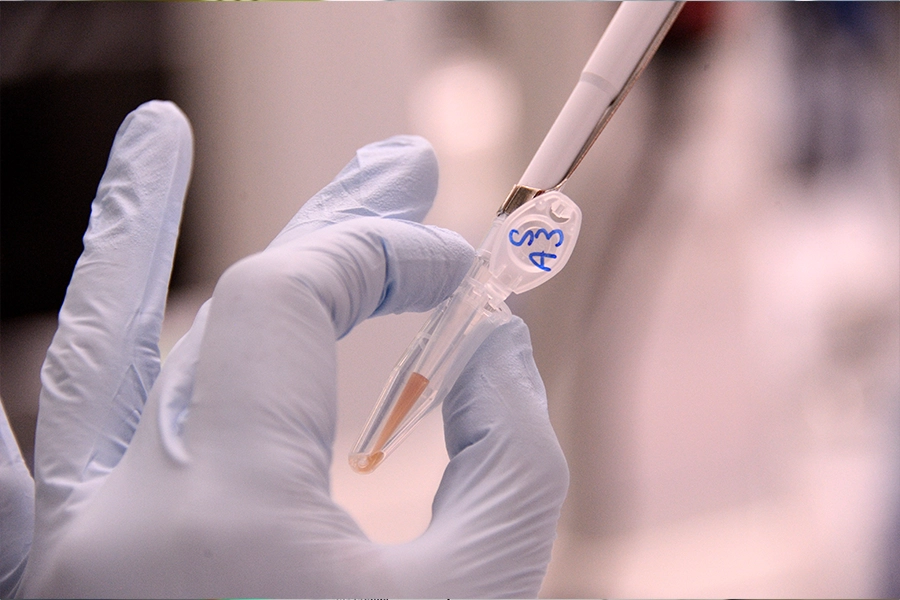 The researchers sequenced B. infantis and B. longum genomes from all publicly available genomes and other studies (Image credit: Wellcome Sanger Institute).The research was also carried out by experts at the University of Oxford, UK, and the Kenya-based KEMRI-Wellcome Trust Research Programme, and the Childhood Acute Illness and Nutrition (CHAIN) Network.
From genome sequencing to missing microbes
The researchers sequenced B. infantis and B. longum genomes from all publicly available genomes, the UK Baby Biome Study, and the CHAIN study of children from six countries across sub-Saharan Africa and South Asia.
The paper found that babies from the UK, Europe, and North America are the only ones missing B. infantis. Currently, B. longum and B. infantis are commonly used in commercial infant probiotics to support the microbiome.
However, the team notes that there are increasing questions on the clinical effectiveness of some commercial probiotic strains. Additionally, regulatory bodies are increasingly examining probiotic safety.
“Major changes in modern industrialized lifestyles since World War II, such as antibiotic use, changes in adult and infant diet, an increase in more processed food, access to healthcare, and clean drinking water, are not just affecting the microbiomes of mothers and babies, but everyone living a more industrialized lifestyle,” notes Shao.
“This is compared to those with diverse, ancestral-type microbiomes living in less industrialized countries. These long-term, generational shifts are evident in research such as ours, which clearly shows that infants’ gut bacteria in Western countries differ from those elsewhere.”
Impacts of increasing industrialization?
Shao explains that industrialized lifestyles may have reduced the conditions that the microbiome requires for B. infantis to persist in populations.
 All commercial infant probiotic strains were traced to three bacterial strains that are not found in today’s infant populations (Image credit: Wellcome Sanger Institute).However, these lifestyles are spreading worldwide, including in Africa and South Asia. He says that knowing what this means at a population scale is an open question.
“Under this industrialization-driven ‘missing microbes’ hypothesis, it is reasonable to expect that similar forces accompanying rapid industrialization and urbanization could lead to similar outcomes in other regions over time.”
“This underscores the need for more longitudinal infant microbiome research in under-represented regions to define baseline (‘ancestral’) early-life microbiomes and determine how microbial losses relate to infant health outcomes,” suggests Shao.
In the future, the team plans to further detail gut bacteria profiles of infants from different regions of the world.
“What we can say at this stage is that infant gut microbiome development in less industrialized populations across South Asia and Africa appears to follow a substantially different trajectory from that most often described in Westernized cohorts. B. infantis is a key driver and differentiator, but it is not the only one. Other ‘ancestral’ early-life microbes also play important roles,” stresses Shao.
The research was funded by Wellcome Trust and the Gates Foundation.
Bifidobacteria and health benefits
In recent headlines, researchers patented a method that uses metabolites from Bifidobacteria to reduce the risk of allergies and asthma in children.
Another study found that probiotic supplementation can help restore the gut microbiomes of infants who have been exclusively breastfed, counteracting the decline in beneficial gut bacteria, specifically B. infantis.
Additionally, Persephone Biosciences found that 76% of US infants’ gut microbiomes put them at risk for developing allergies, asthma, eczema, and dermatitis due to a deficiency in bifidobacteria.