




CPHI Milan 2026: Lonza Capsugel backs capsule-in-capsule tech for sensitive actives

Key takeaways
- At CPHI Milan 2026, Lonza Capsugel’s Giuseppe Pacileo told us that capsule choice is central as multi-ingredient supplements grow more complex.
- A study shows that Duocap capsule-in-capsule technology achieved 53–87% ingredient recovery in the intestine, versus 16–21% for immediate-release capsules.
- Lonza Capsugel highlights key European manufacturing sites that run on 100% renewable electricity as a sustainability and supply-chain advantage for regional brands.

At CPHI Milan 2026 (Oct 6–8), Lonza Capsugel exhibited its pharmaceutical and nutraceutical oral delivery technologies alongside presenting solutions to help move toward a net-zero future.
At the trade show in Italy, the company highlighted advancements in capsule technology that enhance delivery and protection of sensitive ingredients in supplements. Lonza Capsugel also detailed where supplements are heading in the next few years, and how its European manufacturing helps secure supply chains.
“Over the past few years, capsules have continued to advance to keep pace with both more complex formulations, such as multi-ingredient solutions, and heightened consumer expectations, like the increased demand for more sensorial experiences,” Giuseppe Pacileo, VP of Regional Business Unit Head EMEA at Lonza Capsugel, told Nutrition Insight.

“At the same time, new research further supports the role of capsules in protecting sensitive ingredients and delivering them where they are needed in the gut. For instance, a 2026 study using the SHIME model shows how Lonza Capsugel’s Duocap capsule-in-capsule technology addresses acid degradation and intestinal instability.”
The Simulator of the Human Intestinal Microbial Ecosystem (SHIME) is a gut model that mimics the entire gastrointestinal tract.
Pacileo says the study showed that Duocap capsule-in-capsules had a 53–87% ingredient recovery and significantly higher activity in the intestinal phase — unlike immediate-release capsules that release a considerable proportion of its contents in the stomach, achieving 16–21% ingredient recovery in the upper small intestine.
“These results suggest that ingredients released too early may lose functional activity before reaching their optimal absorption site,” remarked Pacileo. “By protecting ingredients such as vitamins and minerals until they reach the appropriate region of the gastrointestinal tract, Capsugel Duocap technology can help maximize ingredient stability and effectiveness.”
“Capsugel Duocap capsules also combine multiple ingredients into one dose and enable tailored release profiles, helping brands meet growing demand from consumers looking to consolidate their supplement routines. Together, these advances give brands the freedom to build more premium, differentiated products.”
Protecting sensitive ingredients
Working with oxygen-sensitive actives has posed a challenge to formulators. Pacileo said there are currently many methods to ensure protection, from capsule polymer choice to more advanced technologies.
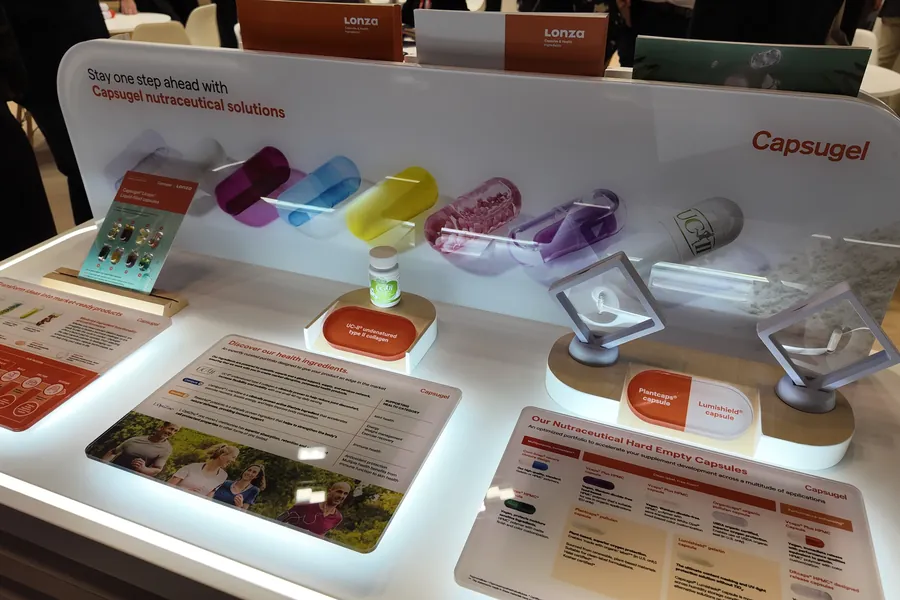 Plant-based capsules deliver the highest oxygen barrier properties of any capsule material on the market, says Pacileo.“Take plant-based pullulan capsules as an example. They deliver the highest oxygen barrier properties of any capsule material on the market, extending the stability of oxygen-sensitive ingredients.”
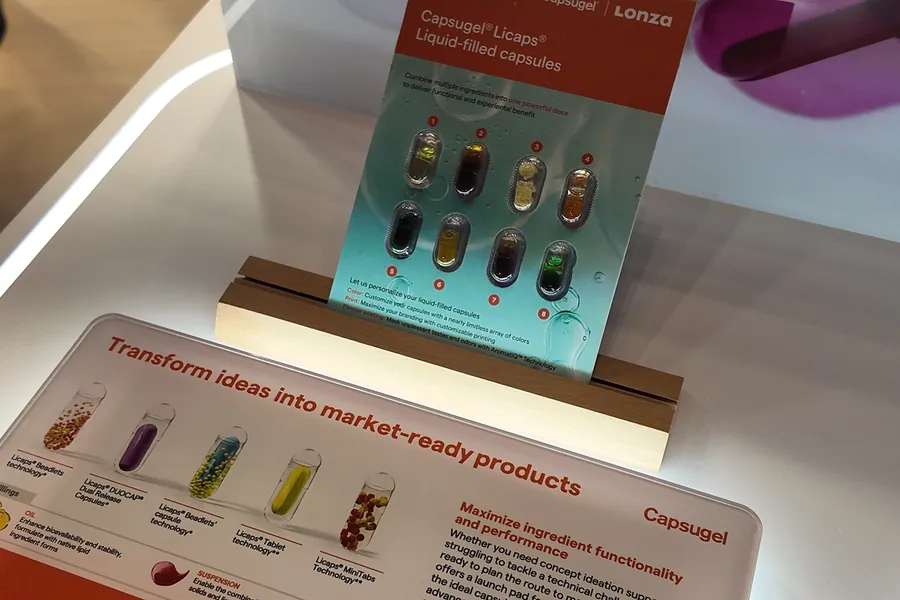
“Our pullulan Capsugel Plantcaps capsules have an oxygen permeability of 0.5 cm³/m²/day, compared with 3.4 for gelatin and 166 for hydroxypropyl methylcellulose (HPMC). What is more, our Licaps liquid-filled capsules tackle oxidation from inside the capsule. Their nitrogen bubble infusion process displaces oxygen before sealing, providing excellent protection for oxidation-sensitive and high-value ingredients,” Pacileo detailed.
Also reducing the risk of oxidation and ingredient degradation, patented LEMS (Liquid Encapsulation Microspray Sealing) technology creates a wider, band-free seal zone that brings enhanced capsule integrity and shelf life, Pacileo pointed out.
“Whether formulating powders or liquids, brands today have the capsule options they need to confidently protect sensitive ingredients.”
We previously spoke with the company’s associate director of Dosage Form Solutions & Ingredients, Juliana Erickson, who detailed the importance of choosing the right capsule polymer, convenience formats, and Lonza Capsugel’s AromatiQ capsule coats for natural scents.
Future of supplement design
Looking ahead, Lonza Capsugel expects multi-benefit and -ingredient supplements to continue growing in the next couple of years. This makes dosage format choice essential to product success, said Pacileo.
“To combine multiple ingredients within a single dosage form, brands need to start building delivery technology into product development from the outset, which requires the right formulation and manufacturing expertise.”
“This is where our concept-to-market Innovation Services comes in,” noted Pacileo. “We apply advanced polymer science and capsule technology expertise to help turn complex technical challenges, such as combining otherwise incompatible ingredients, into breakthrough supplements that keep brands one step ahead.”
European manufacturing advantage
Pacileo said that almost 94% of capsules produced in Lonza Capsugel’s European manufacturing are sent to regional brands.
 Lonza Capsugel expects multi-benefit and -ingredient supplements to continue growing in the next couple of years.“For European brands, this supports local manufacturing and reduced carbon emissions [compared with global non-decarbonized suppliers in 2023] product claims, as well as end-to-end traceability from raw material purchasing to consumers.”
“We have also invested in decarbonizing manufacturing, particularly at our European facilities in Bornem (Belgium) and Colmar (France), which, as of 2025, run on 100% renewable electricity,” Pacileo pointed out. “With a growing number of consumers seeking more sustainable supplements, this helps brands build products with science-backed and regulatory-compliant sustainability credentials.”
He further explained that producing capsules close to customers also helps secure supply chains, with reduced import risks, tariffs, and trade-related uncertainty.
“Backed by a strong global manufacturing network, local-for-local supply and deep operational expertise, customers can depend on our resilience, continuity, and flexibility,” added Pacileo. “When product launches need to be fast, our in-stock and ready-to-go program provides fast shipping, with capsules delivered quickly in a variety of polymers, sizes, and quantities.”