



Vitaquest expands probiotics manufacturing and R&D capacities with new facility


Key takeaways
- Vitaquest has doubled its probiotics capacity with a manufacturing site to support next-generation strains, advanced delivery systems, and improved shelf life stability.
- The integration of upstream granulation and drying enables more complex, science-driven probiotic formulations without compromising viability at scale.
- The probiotics market is shifting from commodity products toward precision manufacturing, substantiated strain strategies, and segmented personalization.
 All images credit: Vitaquest
Vitaquest International has opened a new Probiotics Manufacturing Suite in Parsippany, New Jersey, US, to expand its capabilities to meet advancing consumer demand in a growing market.
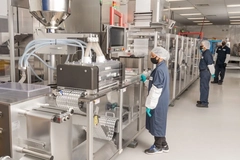
The new facility features two blending rooms and four encapsulation rooms, increasing probiotic production capacity by 100% to future-proof operations, formulating with additional probiotic strains, developing new formats and personalized solutions, and delivering quality that “exceeds global standards” to anticipate increasing scrutiny.
Nutrition Insight meets with Terry Coyle, chief innovation officer at Vitaquest, to explore the facility’s potential new research priorities, product development, and personalization amid a growing and increasingly regulated market.
Coyle says that the biggest shift the facility offers, from an R&D standpoint, is control. “Tight air handling, humidity, and temperature control let us work with far more sensitive strains and delivery systems than were practical before. That opens the door to deeper work on survivability — both during processing and over shelf life — without having to overcompensate with massive overages.”
“It also allows us to more aggressively explore strain–excipient interactions, advanced coating strategies, and multi-phase delivery systems,” he adds. “When you can reliably control the environment, you can design around biology instead of fighting it. That’s especially important as we move into next-generation strains that may be more fragile but also more targeted in their benefits.”
Manufacturing potential
Vitaquest’s new Probiotics Suite is complemented by its granulation and drying facility, which it acquired in 2023. The company notes this facility provides “critical upstream” support for complex formulations.
This facility enables a controlled pre-treatment of challenging raw materials to improve flow, reduce moisture, and standardize particle size before incorporating them into live probiotic cultures. This helps protect probiotic viability while enabling a wider range of functional ingredients.
Coyle says that this granulation and drying facility allows the formulation intent to survive the manufacturing process rather than be compromised by it.
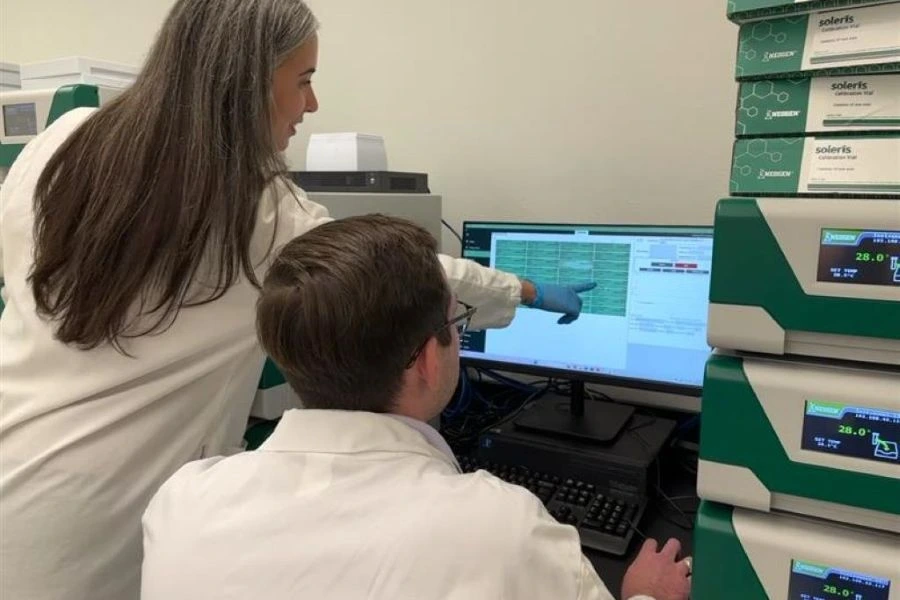 Coyle predicts that successful probiotic companies will have a clear strain strategy, credible substantiation, and shelf-stable formulations.“Integrating granulation and drying upstream gives us much more freedom to design probiotic systems rather than simply blend them,” he details. “It enables tighter control over particle size, density, and moisture — all of which are critical when combining probiotics with prebiotics, postbiotics, enzymes, or sensitive actives.”
“That opens up new concepts like layered delivery, synbiotic matrices, and formats that would otherwise be very difficult to stabilize. It also improves consistency at scale, which is essential as brands move from pilot runs to large commercial volumes.”
The future of probiotics
As scientific understanding of the gut’s role in various health benefits advances, the market for pre-, post-, and probiotics is advancing as well.
In the next three to five years, Coyle predicts that winning companies will be those who treat probiotics as a science-driven category, not a commodity. “That means clear strain strategy, credible substantiation, and formulations designed with real-world manufacturing and shelf life realities in mind.”
In manufacturing, he notes that scale alone is not sufficient, stressing that facilities need precision, flexibility, and deep formulation knowledge to support increasingly sophisticated products. He expects that brands will gravitate toward partners who can help them design smarter products, not only produce them.
Coyle adds that, ultimately, success will come down to consumer trust in science, processes, and products containing what’s on the label throughout a product’s shelf life. He also underscores that the market has moved past generic “billions of CFUs” messaging.
“Brands are now asking very specific questions about strain identity, documented mechanisms, and clinical relevance. There’s more interest in single-strain or tightly curated multi-strain formulas where each component has a clear role.”
“We’re also seeing diversification in formats — capsules are still strong, but stick packs, sachets, chewables, and functional food-adjacent formats are growing fast. That puts pressure on manufacturers to truly understand how processing affects viability.”
He also observes rising expectations for scientific substantiation. Even if full clinical trials aren’t always feasible, he says that brands want stability data, strain documentation, and a credible scientific narrative. “That’s where having in-house formulation expertise becomes just as important as manufacturing capacity.”
Personalization trend
Much like the wider nutrition market, Vitaquest notes a growing interest in personalized probiotics. The new facility will have capabilities to develop personalized wellness solutions.
 The new facility includes two dedicated blending rooms, four encapsulation rooms, and advanced environmental controls to protect probiotic viability and potency.Although Coyle notes that personalization is conceptually very appealing, he says that, at scale, it’s more aspirational than operational.
“The biggest gaps are reliable, standardized microbiome data and clear cause-and-effect relationships between specific strains and individual outcomes.”
He notes that, from a manufacturing perspective, personalization requires flexible, small-batch capabilities and extremely tight quality systems — otherwise, costs and complexity increase quickly.
“Right now, what’s more realistic is segmented personalization: formulas designed for defined populations or needs rather than fully individualized products,” details Coyle. “As the science matures and data pipelines improve, personalization will become more practical — but it will require manufacturers who are built for precision, not just volume.”
Growing regulatory scrutiny
According to Coyle, the new facility will enable Vitaquest to deliver supplements that meet regulatory and consumer quality expectations.
He says that regulatory scrutiny is already pushing the industry toward better discipline.
“That’s a good thing. We expect more focus on substantiated claims, accurate strain identification, and demonstrated stability through the end of shelf life — not just at time of manufacture.”
“That will likely mean fewer exaggerated structure or function claims and more emphasis on well-defined benefits supported by a combination of clinical data and robust formulation science,” he speculates. “Manufacturers will need to be able to defend their numbers, their processes, and their rationale.”
He concludes that facilities that can demonstrate environmental control, validated processes, and thoughtful formulation will be “much better positioned as expectations continue to rise.”