


UK shoppers call for mandatory traffic light nutrition labels to tackle “obesity crisis”

Key takeaways
- UK consumers favor traffic light nutrition labels over other front-of-pack schemes but want clearer, more consistent use across products and retailers.
- New research by Which? shows nutrition labels influence purchasing decisions, particularly for snacks, dairy, and breakfast cereals.
- Which? urges the UK government to make front-of-pack nutrition labeling mandatory, with stronger oversight from food safety authorities.

UK shoppers prefer clear and consistent nutrition labels, according to new research by the consumer protection service Which?. For more than a decade, the country has used traffic light labeling to indicate the nutritional quality of F&B products.
However, as the system is government-recommended rather than mandatory, its use remains inconsistent across retailers and products. Which? finds that consumers favor the traffic light system over other front-of-pack nutrition labeling schemes, while demanding uniform implementation and clear presentation.
A third (33%) of participants indicated (unprompted) that the nutrition label was the first thing they looked at on the front-of-packaging when choosing a product in the supermarket. Nutrition consideration came third after brand (40%) and price (37%).

The research shows consumers most often use the traffic light label when deciding between snacks (56%), dairy products (33%), and breakfast cereals (27%). Meanwhile, nearly half (47%) of participants describe the traffic light label as easy to understand, and 27% say it helps them make quick decisions when purchasing groceries.
“The UK is in the midst of an obesity crisis, and it’s clear that a better approach to front-of-pack labeling is needed to help shoppers make healthier choices,” says Sue Davies, head of Food Policy at Which?.
“Which? is calling on the government to ensure that all manufacturers and retailers use front-of-pack nutrition labeling — ideally by making this mandatory. Our research shows that people still prefer traffic light nutrition labeling, but that the current scheme needs updating so that it is clearer and simpler, and works better for consumers.”
“The new system should be backed up with effective enforcement and oversight by the Food Standards Agency and Food Standards Scotland — so shoppers have full trust in the labels on their food.”
Traffic light preferred
A third of participants indicated they look at the nutrition label first when buying an F&B product.Which? surveyed several in-depth focus groups to evaluate how well other front-of-pack nutrition labeling systems helped UK shoppers identify healthier foods. These included the Nutri-score system used in some European countries and the Chilean nutrition warning label.
The traffic light labeling system was preferred by the majority of participants, who demand the labels to be a requirement on all food products and that, with a few simplifications, can support more confident, healthier choices.
The most common suggestions to improve the traffic light scheme were more prominent placement on the packaging, increased size, and readability.
The surveyed consumers also highlighted the need for improved awareness and simplification. One given example of how this can be achieved is by removing the percentage reference intakes, said to be difficult for some to understand, as well as by making the recommended serving sizes more “realistic and consistent.”
The Which? research included capturing real-time insights through consumers’ mobile phones while they go through their daily routines, like shopping or looking through their kitchen cupboards.
These real-time insights raised similar key issues, namely the need for more prominent placement on the packaging (27%) and increased size and readability (25%).
Inconsistent labeling
Highlighting the current inconsistencies in the UK’s nutrition labeling, the consumer protection service points out that supermarket chain Iceland does not use the traffic light color coding for its own-brand products.
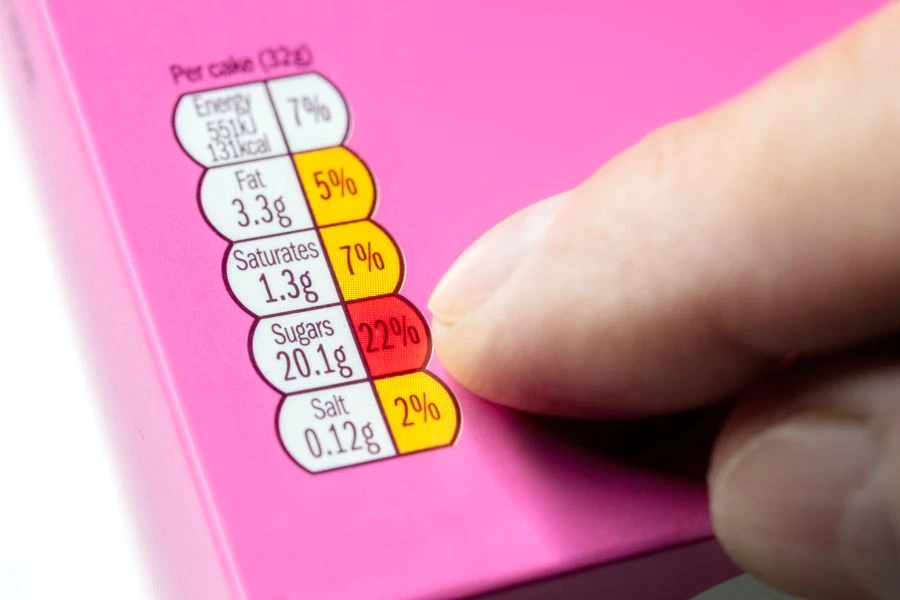 The traffic light labeling system was preferred by the majority of UK participants.The researchers also looked at popular frozen pizza brands’ use of traffic light labeling and found various approaches to marketing the same product. Crosta Mollica, Pizza Express, and Italpizza la Numero Uno do not have any front-of-pack nutrition labeling.
Meanwhile, Dr. Oetker and Chicago Town pizza have the traffic light labeling, but in black and white, thus not featuring the colors indicating the nutritional value of the product.
Which? says: “This inconsistency can make it difficult for shoppers to easily compare items and see which are high in fat, sugar, or salt.”
One participant says: “I dislike that companies can manipulate the traffic light system by labeling food content based on a small portion size, even though most people are likely to consume the entire product in one sitting, which undermines my trust in these companies.”
The UK and EU have committed to a Sanitary and Phytosanitary Agreement, which may have implications for the UK’s ability to regulate food labeling as it allows for exemptions.
In light of the regulatory talks, Which? is calling on the UK government to push for an exception for front-of-pack nutrition labeling and introduce a UK mandatory front-of-pack nutrition labeling scheme.
In similar developments, the Canadian government made nutrition labeling mandatory at the start of this year. Packaging Insights spoke to Health Canada to find out more.