




Men’s health nutraceuticals: Marinova’s fucoidan eases prostate symptoms in study

Key takeaways
- Marinova’s 90-day study found that 1,000 mg of high-purity fucoidan significantly improved urinary symptoms in men with BPH.
- Participants experienced more than nine-fold improvements in voiding symptoms and two-fold improvements in storage symptoms compared with placebo.
- The supplement was well tolerated, improved quality of life, and did not interfere with prostate-specific antigen monitoring.

Marinova has published a study on its Undaria pinnatifida fucoidan — bioactive sulfated polysaccharides found in brown seaweed — for prostate health. The Australian biotech company found that supplementation statistically improved the symptoms of benign prostatic hyperplasia (BPH), or prostate enlargement, in a clinical trial.
BPH is a significant health issue for men globally and becomes increasingly common with age. It causes symptoms of discomfort and pain, such as increased frequency and difficulty urinating.
The company says this is the first clinical study to have been published on investigating high-purity fucoidan and its potential for prostate health support.
“This was a rigorous study delivering statistically and clinically significant results. These findings will certainly be of interest to nutraceutical brands targeting men’s health,” says study lead author, Dr. Barbara Wimmer, research director at Marinova.

Prostate health improvements
The study, published in Research and Reports in Urology, used the International Prostate Symptom Score, which measures incomplete emptying, frequency, intermittency, urgency, weak stream, straining, and nocturia — waking up more than once per night to urinate — on a scale from zero to five from “not at all” to “almost always.”
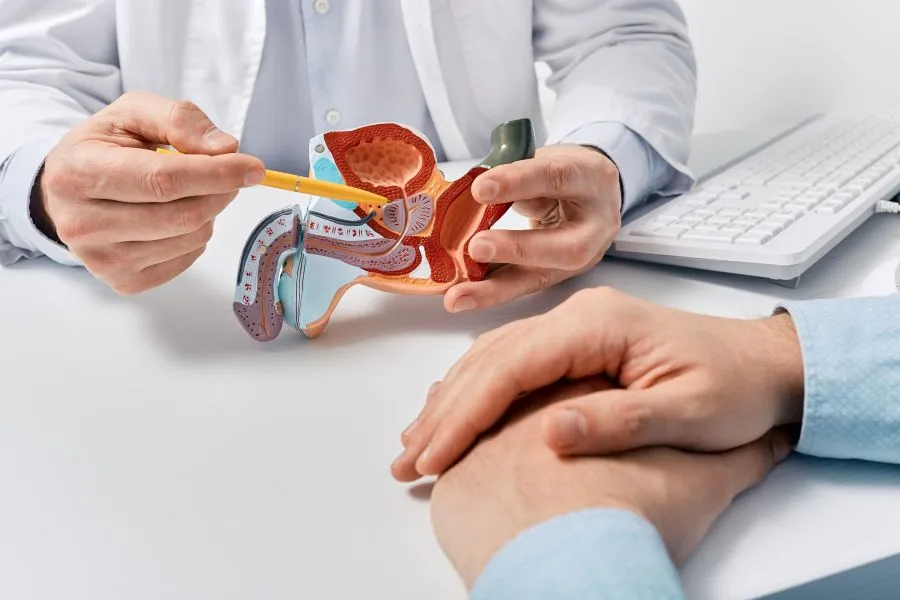 The study included 88 men aged between 40 and 85, who all had clinically confirmed BPH.Eighty-eight men aged between 40 and 85 who had clinically confirmed BPH participated in the study. For 90 days, half of the men were given a daily supplement of 1,000 mg with high-purity U. pinnatifida fucoidan, and the other half were given a placebo.
“Men taking the fucoidan supplement experienced a more than nine-fold improvement in voiding symptoms (encompassing the symptoms of emptying, intermittency, weak stream, and straining) and a two-fold improvement in storage symptoms (encompassing the symptoms of frequency, urgency, and nocturia) compared to those taking the placebo,” says Marinova.
Improvements in symptoms were observed at day 60, with further improvements at day 90.
The company adds that due to urinary symptom improvement, supplementation improved overall quality of life, and it was shown to be safe for consumption throughout the study period.
Additionally, the supplement did not interact with prostate-specific antigen levels, which suggests supplementation does not interfere with routine prostate health monitoring.
Fucoidan is seeing an increased demand as it is sought for its immunomodulating, antioxidant, anti-allergic, and anti-inflammatory properties, Marinova said previously.