



Higher legume consumption linked to lower hypertension risk in study


Key takeaways
- A meta-analysis has linked higher consumption of legumes and soy to a significantly lower risk of hypertension.
- The optimal daily intake for legumes is 170 g, and for soy, it’s 60–80 g, associated with blood pressure reduction of up to 30% and 29%, respectively.
- The study suggests integrating more legumes and soy into global dietary guidelines to help tackle hypertension as a public health issue.

An international review study has linked a higher intake of soy and legumes to a lower risk of high blood pressure.
Using data from 12 studies across seven countries, the study claims to be the first meta-analysis to evaluate the association between eating soy food products and hypertension.
It aims to influence future dietary guidelines to increase the overall intake of legumes and soy to help global health policies aimed at reducing the global issue of hypertension.
“This research strengthens the evidence base for the cardioprotective benefits of plant-based diets. The authors have significantly added to the case for using legumes and soy as primary dietary strategies to mitigate the global burden of hypertension,” comments professor Sumantra Ray, chief scientist and executive director of NNEdPro (Need for Nutrition Education/Innovation Programme) Global Institute for Food, Nutrition and Health.

Spotted an optimal amount
The review, published in BMJ Nutrition, Prevention & Health, analyzed 10 publications with data from 12 observational studies, spanning the US, China, South Korea, Japan, Iran, France, and the UK. The studies included up to 88,475 participants, with high blood pressure cases up to 35,375.
Legumes have previously been linked to a lower risk of cardiovascular disease, the authors note. Prior studies have also linked them to beneficial micronutrient levels and inflammation.
In the review, the collected data from the prior studies demonstrate that a regular intake of legumes is associated with a lower risk of high blood pressure.
When compared to those consuming a low amount of legumes and soy, the risks of developing high blood pressure decreased by 16 and 19%, respectively.
The authors say the optimal daily amount is to consume 170 g of legumes, including lentils, peas, chickpeas, and beans, as this has been linked to a 30% lower hypertension risk. For soy products, such as tofu, edamame, soymilk, tempeh, and miso, 60–80 g daily consumption was found optimal, associated with a 29% lower risk.
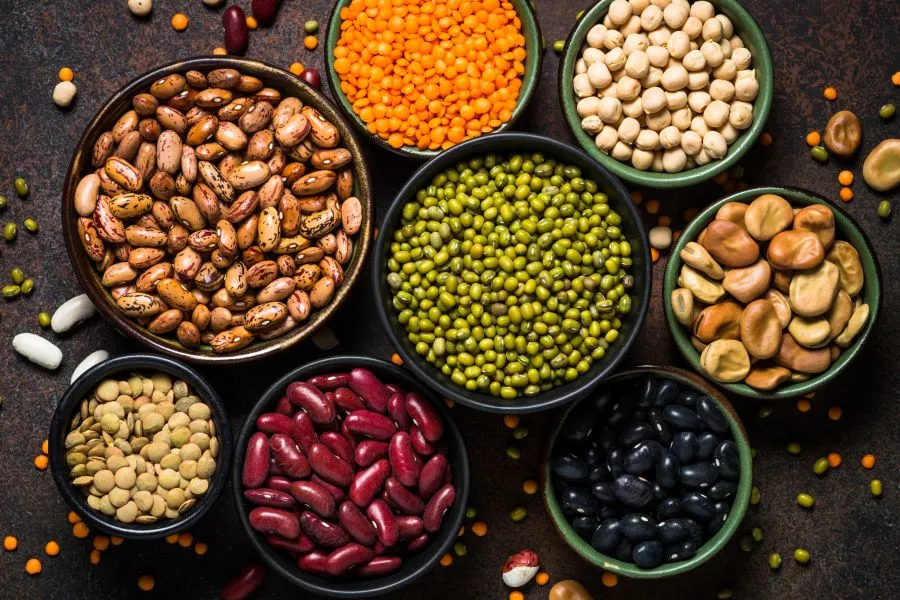 Legumes and soy are high in potassium, magnesium, and dietary fiber.They further explain that legumes and soy are high in potassium, magnesium, and dietary fiber. These nutrients are all previously known for having blood pressure-lowering properties.
Additionally, the fermented soluble fiber from these foods produces short-chain fatty acids, which influence blood vessel dilation, while the isoflavone content of soy also seems to help lower blood pressure.
“The strengths of the study lie in its rigorous dose-response analyses, which offer practical dietary targets for use in public health guidelines and clinical practice. But we can’t entirely rule out the influence of unmeasured influential factors,” adds Ray.
“And the plateauing of benefits for soy at 60–80 g per day warrants further investigation, as it remains unclear if this reflects a true biological limit or is a byproduct of the smaller number of studies available for analysis.”
Improving health through diet
The authors note some limitations of the study, such as not including different sources of legumes, preparation types, levels of intake, dietary patterns, and a clear definition of high blood pressure.
“Despite these limitations, the findings of this meta-analysis have major public health implications, given the alarming global increase in hypertension prevalence,” they note.
“Current legume consumption across Europe and the UK remains below dietary recommendations, with average daily intakes of only 8–15 g, far below the daily recommendations of 65 to 100 g recommended for overall cardiovascular health.”
A recent study found that poor diets, including those lacking whole grains and fruit, were linked to a higher risk of cardiovascular disease.
The American Heart Association recently warned that 60% of US women will have one type of cardiovascular disease by 2050, fueled by increased diabetes rates, high blood pressure, and obesity.