



Collagen peptides show short-term bone benefits in premenopausal athletes


Key takeaways
- A study has found that supplementing with collagen peptides improved short-term bone turnover and reduced inflammation in female runners within four weeks.
- The research found that collagen peptides’ amino acid structures that stimulate bone-building cells help counter bone breakdown caused by intense training and under-fueling.
- Active premenopausal women who supplement with collagen may actively prolong bone health before peak bone density begins to decline.

New women’s health research reveals that premenopausal female runners supplementing with collagen peptides improved their short-term bone turnover and reduced inflammation within four weeks. The authors aimed to fill a research gap in collagen peptides in premenopausal endurance athletes, who face specific bone health risks.
The researchers note that premenopause is an important phase for optimal, lifelong bone health. However, most research on collagen for bone health focuses on postmenopausal women.
To learn more, Nutrition Insight speaks to the study’s lead author, Jennifer Fields, professor of nutritional sciences in the College of Agriculture, Health and Natural Resources, in Connecticut, US.
“Our findings suggest that collagen peptides could be a promising supplement. We saw improvements in bone turnover markers after just four weeks, which is encouraging. While we can’t yet say collagen peptides will prevent stress fractures or improve bone mineral density, these acute changes do suggest it could support bone health.”
However, she emphasizes that longer-term studies are needed to determine whether these early responses translate into meaningful clinical benefits.
Runners must feed their bone cells
The study published in Frontiers in Nutrition underscores bone health as a significant concern for endurance runners who are consistently putting significant strain on their bones.
Researchers explain that when running places stress on the bones, it can activate osteoclasts — specialized bone cells that break down and resorb bone tissue.
For runners who are not consuming enough calories, osteoblasts — bone cells that build new bone — don’t receive enough fuel needed to perform properly.
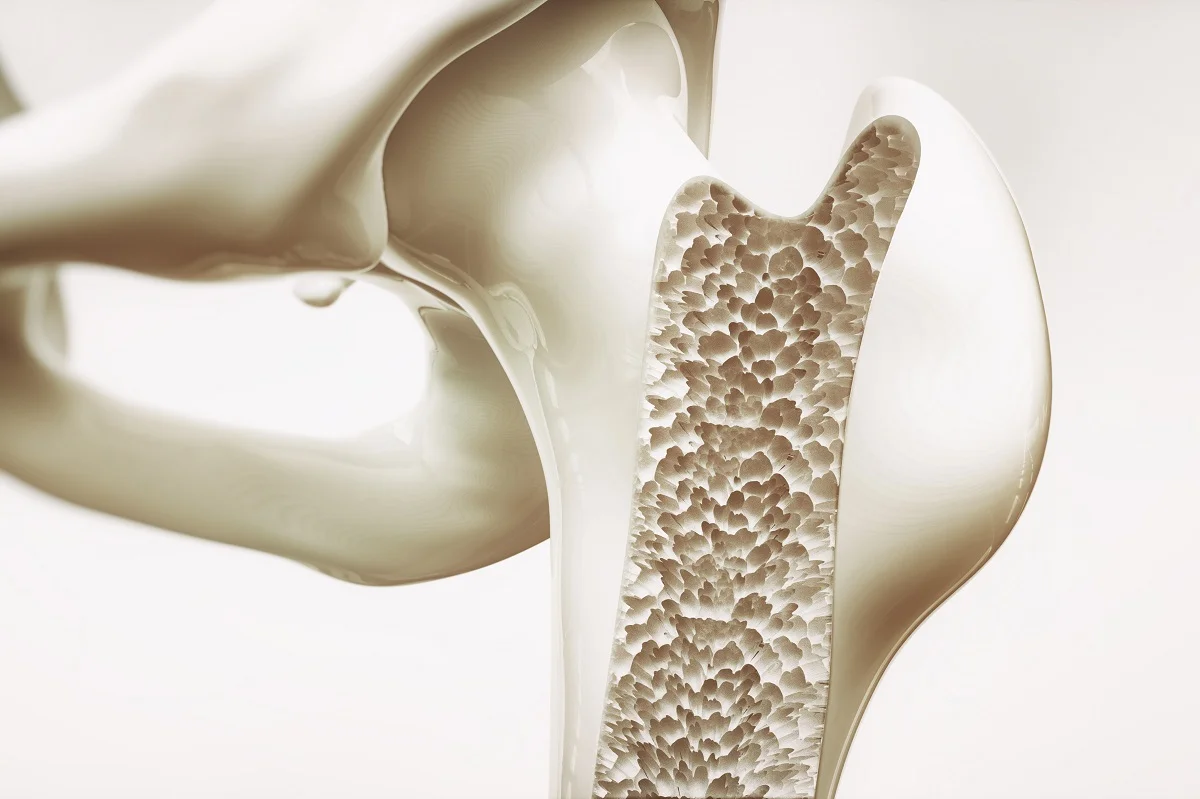 For runners who are not consuming enough calories, cells that build new bone do not receive enough fuel needed to perform properly.Fields stresses that runners who are at a higher risk of stress-related injuries are often compromised simply due to under-fueling to support training, recovery, and adaptation. The study authors note that this can lead to injury and long-term conditions like osteoporosis, which weakens bones.
They add that this is particularly relevant for female runners because of how the bone remodeling cycle interacts with hormones. Insufficient caloric intake lowers estrogen and progesterone levels, which in turn leads to increased bone breakdown and reduced bone formation.
“Ninety percent of peak bone mass is achieved by 18 years old, with the remaining ~10% accrued by around age 30. That makes the premenopausal years a really important window for optimizing lifelong bone health,” Fields notes.
“While there’s a lot of valuable bone research in postmenopausal women, much less attention has been given to younger, active women, which is key from a prevention standpoint. Female runners also face unique challenges, including high training loads and, in some cases, low energy availability, both of which can negatively affect bone health. We wanted to better understand whether collagen could help support the skeleton during this critical stage.”
Interrupting bone degradation
Since 90–95% of the organic bone matrix is made up of collagen, Fields’ team set out to investigate whether collagen peptides intervene in the breakdown of bones during exercise.
She explains that collagen peptides are “incomplete amino acids.” Unlike complete amino acids, they do not trigger a response in muscles. Instead, because of their unique structure — a repetitive pattern of three amino acids — they can trigger osteoclast and osteoblast activity.
“Unlike most dietary proteins, some of the dipeptides and tripeptides that make up collagen peptides can be absorbed intact by our intestine,” Fields notes. “Those di- and tripeptides are what can potentially act on these osteoblast and osteoclast pathways to trigger a better bone turnover response where we’re favoring more bone formation.”
Improving bone turnover
Findings from this pilot study reveal that collagen peptides did improve bone turnover. By analyzing biomarkers in participants’ blood, the researchers discovered that markers linked to bone formation increased. Meanwhile, inflammation decreased in the group that was supplementing with collagen peptides.
“We’re seeing some good preliminary data to show that four weeks is sufficient to move some of those acute biomarkers,” says Fields. “Dose matters, because in our study we used 20 g of collagen peptides, which is higher than what’s included (per serving) in many commercially available products.”
 Findings from the pilot study reveal that supplementing with collagen peptides improved bone turnover in premenopausal female runners.For benefits like skin, hair, and nails, she says that lower doses may often be sufficient. “However, bone research generally uses higher doses, suggesting that supporting bone health may require more collagen than other applications.”
“Companies should also invest in high-quality clinical research to support their claims, because consumers are increasingly looking for evidence-based products.”
Focus on premenopausal women
Previous studies have examined collagen peptides for bone health in postmenopausal women. However, the scientists stress that research on premenopausal women has been extremely limited.
No previous studies had examined female runners specifically, despite their elevated risk of impaired bone remodeling and heightened risk of bone stress injuries.
Additionally, the study authors flag that women’s bone density is generally not checked until after they enter menopause.
The researchers emphasize that supporting bone health in young women is critical to ensuring their lifelong health and wellness. “If we can target the premenopausal population and identify individuals who might be at risk of maladaptive bone responses, then hopefully we can reverse it and prevent early-onset osteopenia and osteoporosis,” says Fields.
“What’s great about collagen peptides is that they’re universal. It’s not a supplement where we’re only expecting one outcome. It can be incorporated into the diet as a supplement to help with some of these other health benefits.”
Collagen peptides’ expanding targets
Collagen peptides have demonstrated their varied clinical applicability for hair, skin, and joint health. Fields believes the new findings could change how collagen peptides are positioned in sports nutrition beyond their current focus on beauty and mobility.
“While the evidence isn’t strong enough yet to recommend collagen specifically for bone health, there’s growing preclinical and clinical evidence suggesting it may influence bone remodeling pathways,” she notes.
“That’s especially interesting for female athletes and other active individuals who may be at increased risk for bone stress injuries or early-onset osteopenia/osteoporosis. And because collagen is already commonly used for its other health benefits, exploring its potential role in bone health is a really exciting next step in the sports nutrition world.”
In a previous interview with Nutrition Insight, collagen peptide specialist Rousselot addressed the category’s rapid expansion beyond generic claims toward more targeted and clinically validated solutions. In particular, it highlighted benefits in metabolic wellness for its collagen peptide Nextida GC.
Rousselot explored how whey protein and collagen peptide blends enable price optimization, formulation advantages, and additional health benefits in a recent webinar, “Whey & Collagen: The Protein Power Couple.”